
Difficulty: Easy | Time: 20 minutes | Steps: 9 | Good for: Kids and beginners
I love drawing dogs because their floppy ears, friendly faces, and wagging tails give them so much character. Even a few small details can make a dog drawing look happy, curious, or playful.
In this tutorial, I’ll show you how to draw a cute dog in 9 easy steps. We’ll start with the head, add the face and ears, and then draw the body, legs, paws, and tail.
I’ll keep everything simple so you can follow along, even if you’re drawing a dog for the first time.
What You Will Need
You only need a few basic supplies for this cute dog drawing.
- A pencil
- An eraser
- A sheet of paper or a sketchbook
- A black pen or marker
- Colored pencils, crayons, or markers
Before You Start
Leave enough room on your paper. We’ll draw a sitting dog, so keep some space below the head for the chest, legs, and paws.
Use light pencil strokes. You may need to adjust a line while drawing. Light marks are easier to erase before you trace the final outline.
How to Draw a Cute Dog Step by Step
We’ll draw a cute cartoon dog sitting and facing forward. It will have a rounded head, hanging ears, a small muzzle, a broad chest, and front paws resting on the ground.
Follow each step in order, and don’t worry if your lines aren’t perfectly even.
Step 1: Draw the Dog’s Head
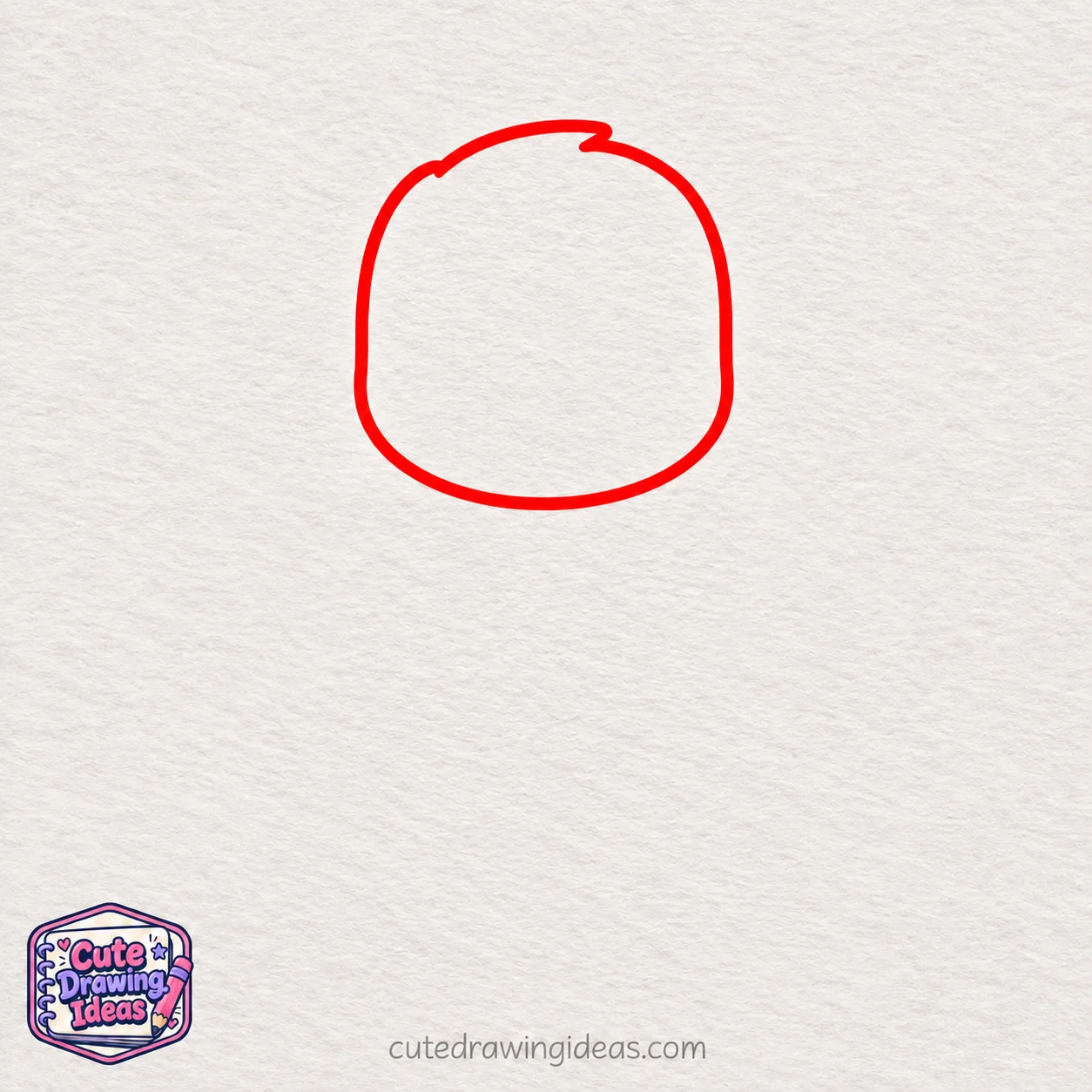
Start near the upper middle of your paper.
Draw a large, rounded shape for the head. Make the top gently curved and bring both sides down toward the cheeks.
Curve the lower edges inward and join them to form a rounded chin.
Keep the head slightly wider than it is tall, but leave enough space below for the body.
This will be the main outline of your dog’s face.
Step 2: Add the Floppy Ears.
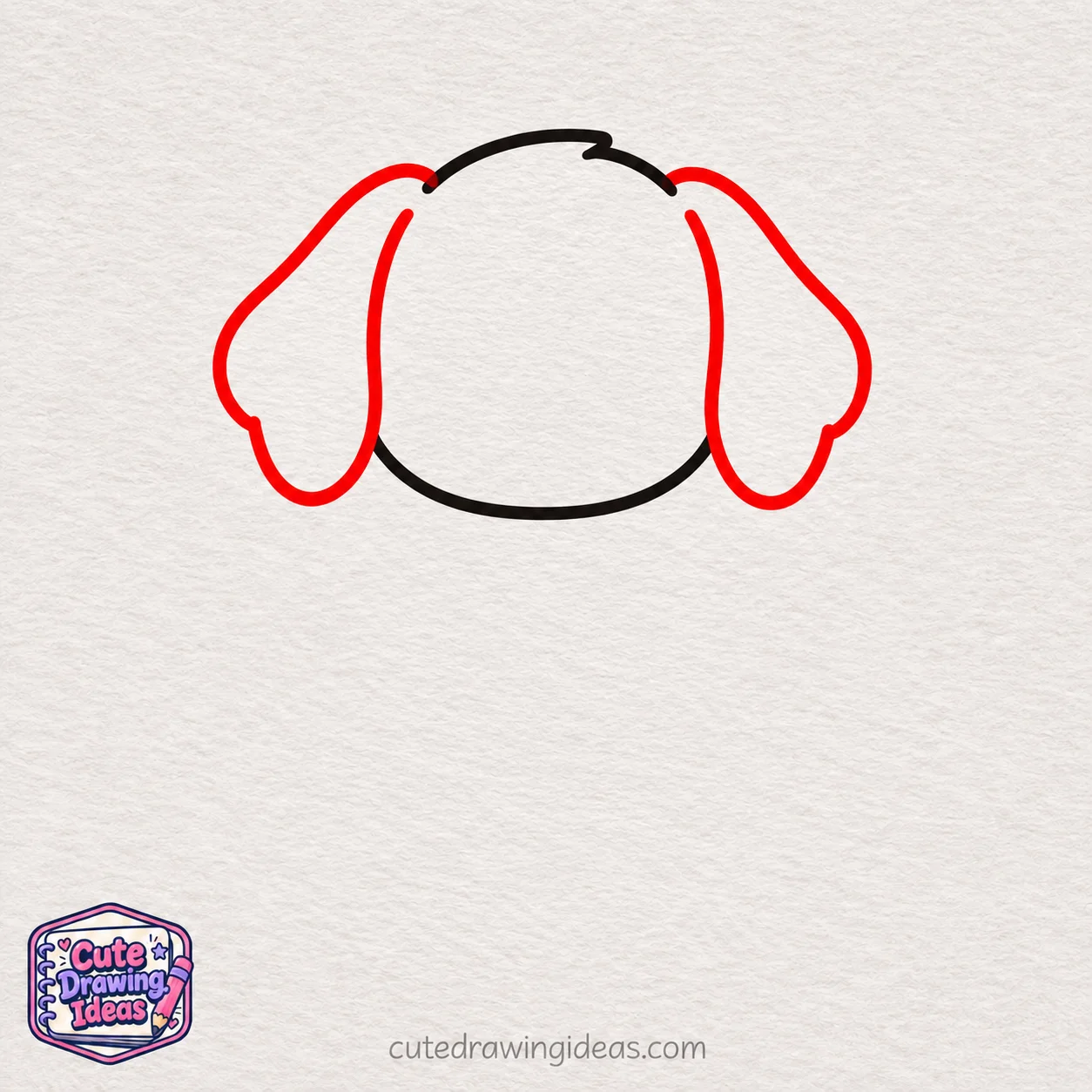
On the upper left side of the head, draw a curved line going outward and downward.
Round the bottom of the ear, then bring another line upward to meet the side of the head.
Repeat this on the right side.
Let both ears hang beside the face, ending near the lower cheeks.
I like giving my dog slightly rounded ears because they make the face look friendly. You can make one ear hang a little lower if you prefer.
Step 3: Draw the Cute Dog’s Eyes
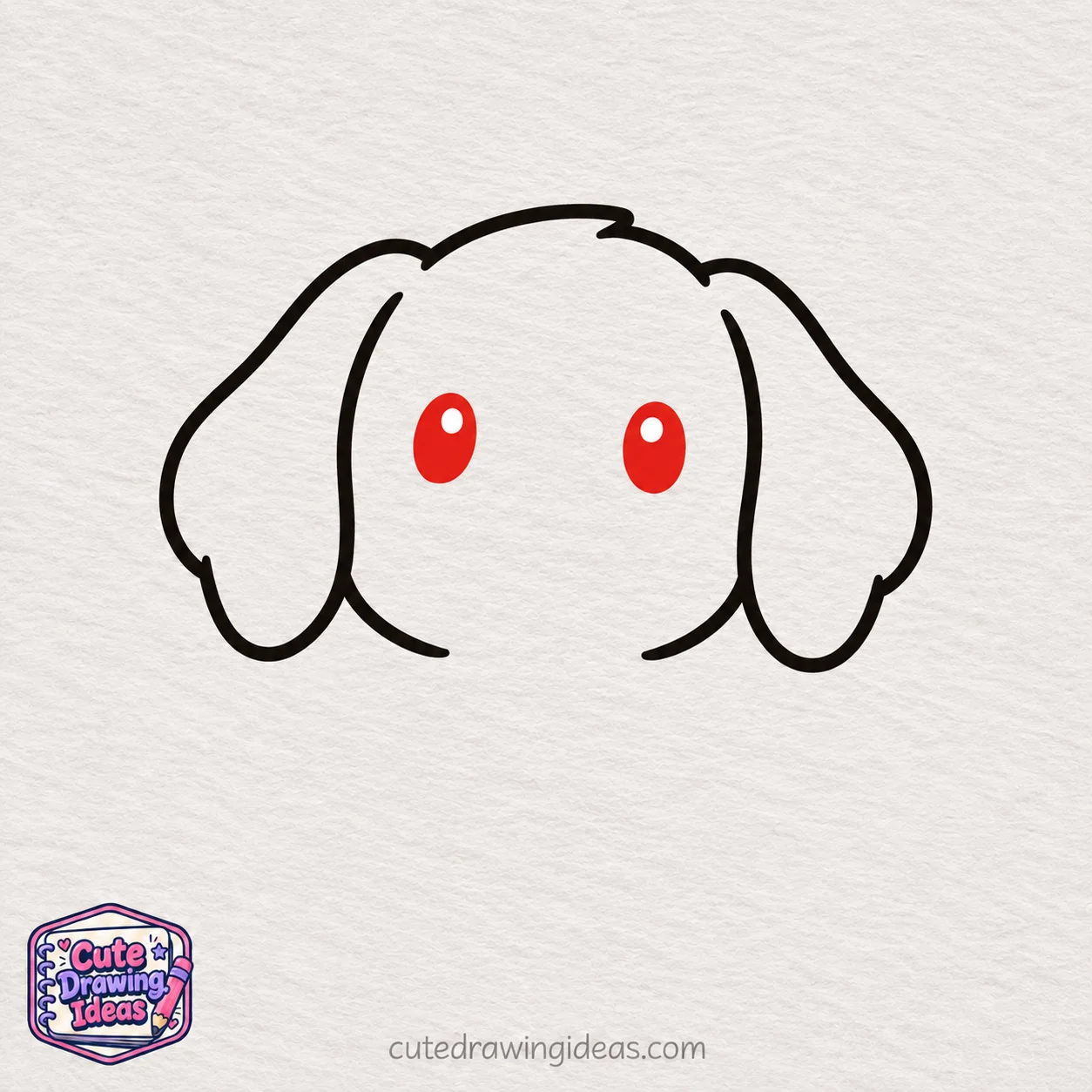
Inside the head, draw two small oval eyes.
Place them across the upper half of the face, leaving enough space between them for the nose and muzzle.
Add a smaller oval inside each eye and fill it with black. Leave a tiny white spot in each pupil to show a highlight.
Check that both eyes are at about the same height before moving on.
Your dog is beginning to have an expression now.
Step 4: Draw the Nose, Muzzle, and Mouth
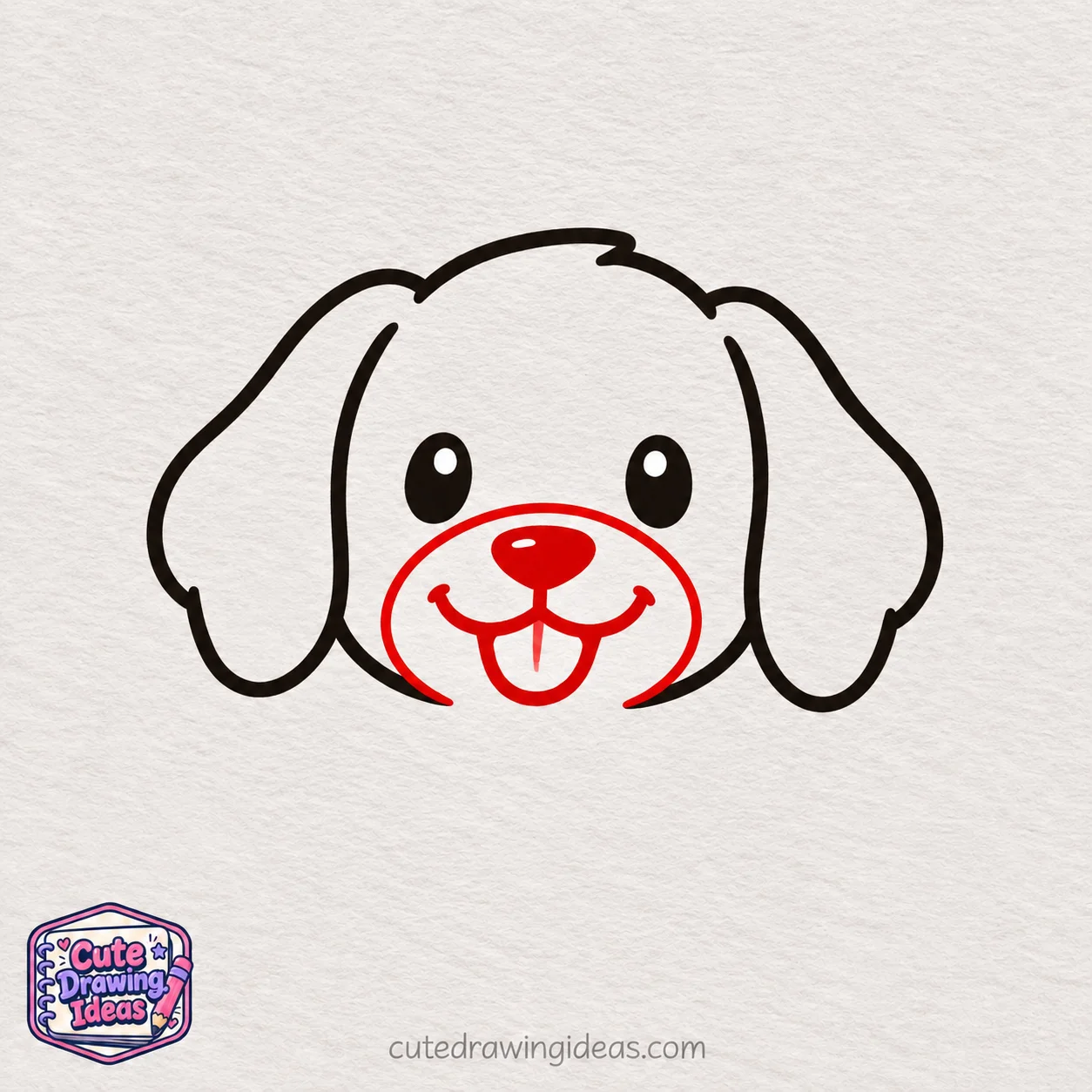
Below the eyes, draw a wide, softly rounded oval for the muzzle.
Keep it centered on the lower half of the face.
Near the top of the muzzle, draw a small upside-down triangle with rounded corners for the nose.
Add a short vertical line underneath the nose.
From the bottom of that line, draw two small curves, one bending left and the other right, to make a gentle smile.
You can leave the mouth closed or add a small tongue underneath it for a playful expression.
Keep the muzzle outline light enough that it doesn’t hide the mouth.
Step 5: Draw the Dog’s Body and Chest
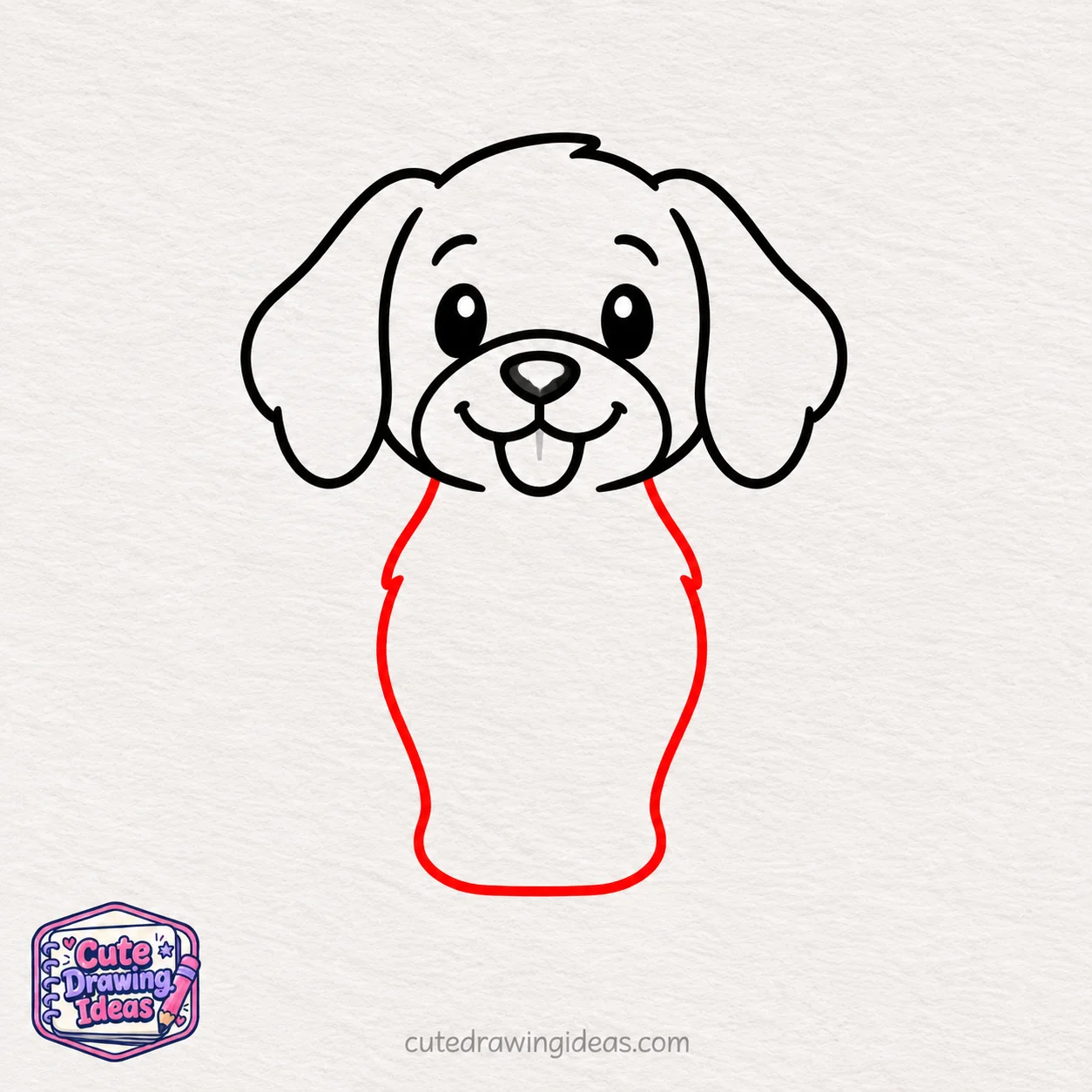
Now let’s draw the body underneath the head.
Start just below the left side of the head and draw a curved line moving downward and outward to form the shoulder.
Bring the line inward slightly toward the lower body.
Repeat on the right side, making the body broad around the chest and narrower near the belly.
Keep the body a little longer than the head.
Leave the lower part open because we’ll add the legs and paws next.
The dog should now have a clear head, shoulders, and sitting body.
Step 6: Add the Front Legs and Paws
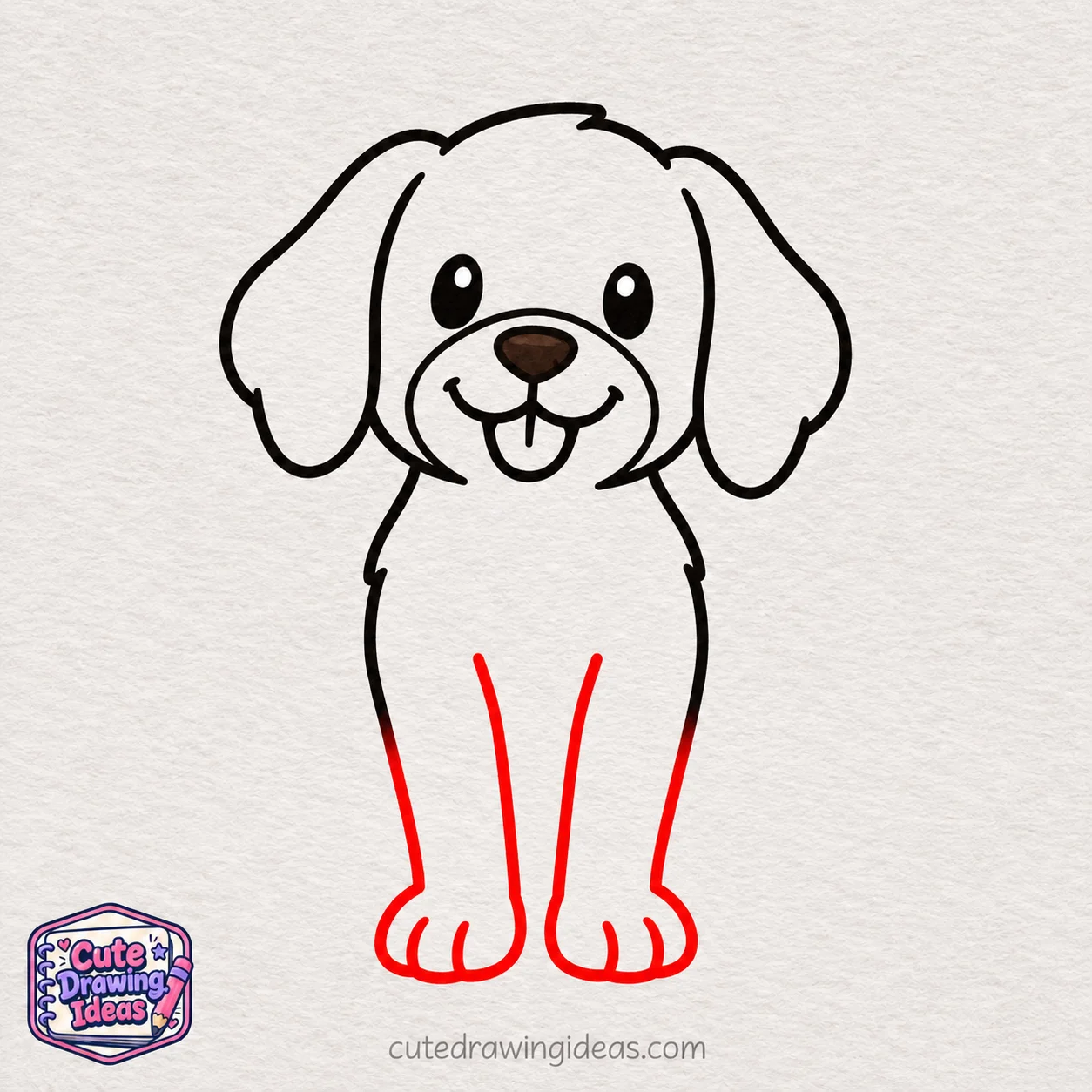
Inside the lower body, draw two front legs extending down from the chest.
Start the first leg below the left shoulder. Draw a line downward, then add another line beside it to give the leg some width.
At the bottom, draw a rounded paw resting on the ground.
Repeat on the right side.
Keep the legs straight but not too thin. The paws should be slightly wider than the lower ends of the legs.
Add two short curved marks on each paw to suggest the toes.
Try to keep both front paws at the same level.
Step 7: Draw the Back Legs, Paws, and Tail
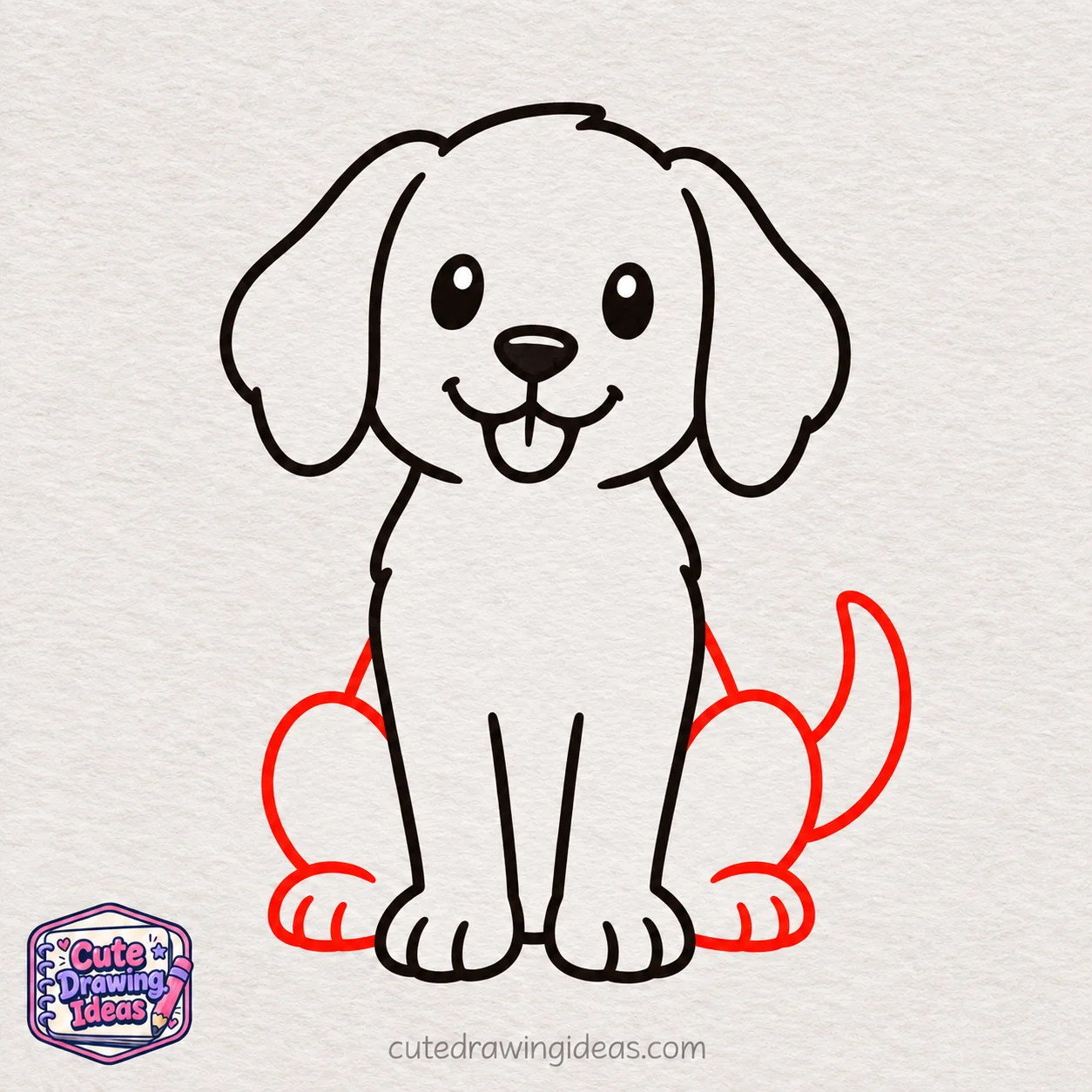
To complete the sitting position, draw a rounded curve on each side of the lower body for the bent back legs.
Start each curve near the side of the chest, then bring it outward and down toward the ground.
At the bottom of each curve, add a small oval-shaped back paw beside the front leg.
Now draw the tail.
Start on the lower right side of the body, behind the back leg. Draw a curved line going outward and slightly upward.
Bring a second line back toward the body to form a tail with a rounded tip.
Make sure the tail appears to come from behind the dog’s body rather than from its front leg.
Your dog should now look like it’s sitting comfortably.
Step 8: Complete the Dog’s Outline
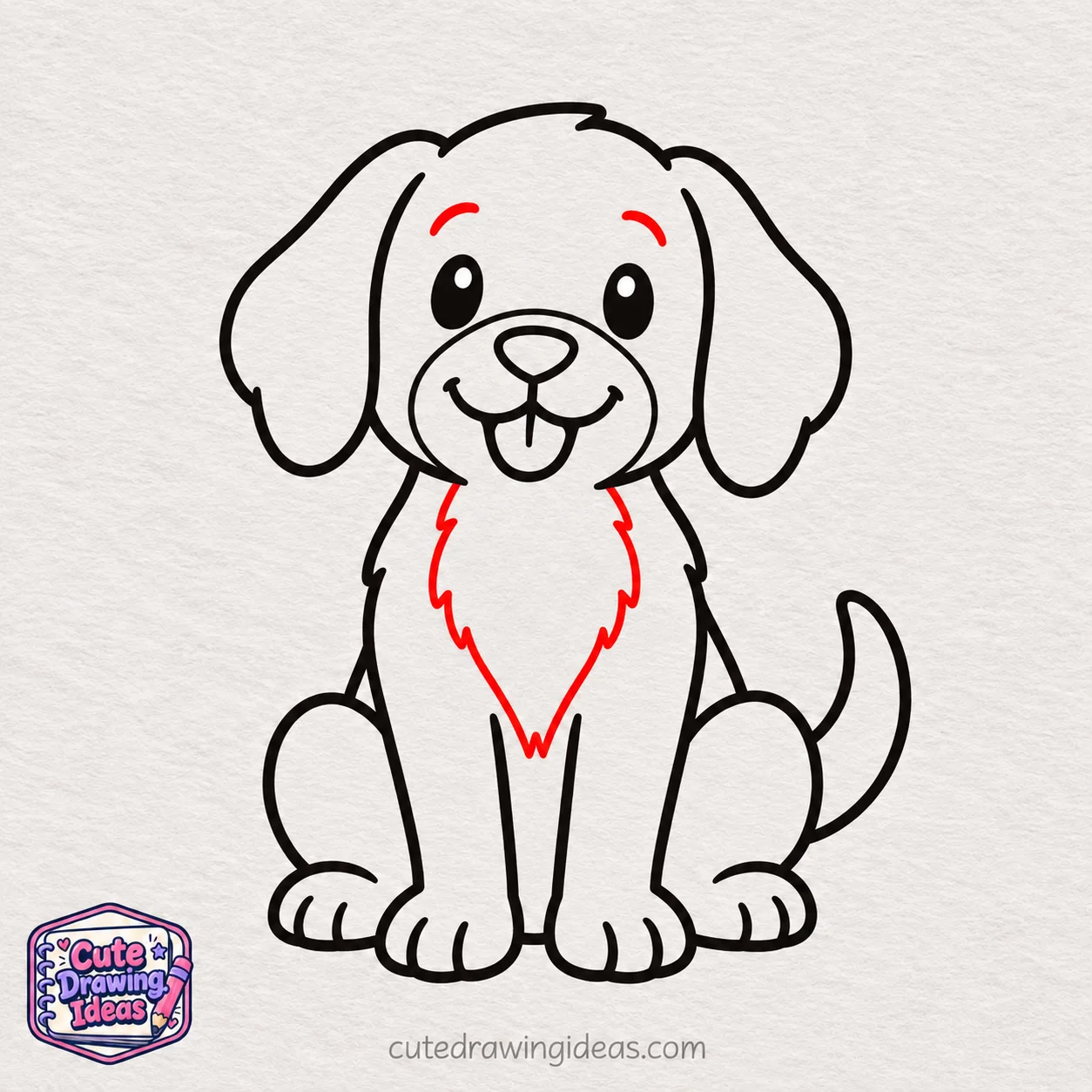
Take a moment to check your drawing.
Look at the ears, face, body, and paws to see whether any lines need adjusting.
Erase the pencil marks where the body overlaps the legs or where the ears connect to the head.
You can also add a small curved patch on the chest or a simple marking around one eye.
When you’re happy with the sketch, trace the visible outlines using a black pen or marker.
Let the ink dry before erasing the remaining pencil marks.
You now have a complete black-and-white dog drawing.
Step 9: Color Your Cute Dog
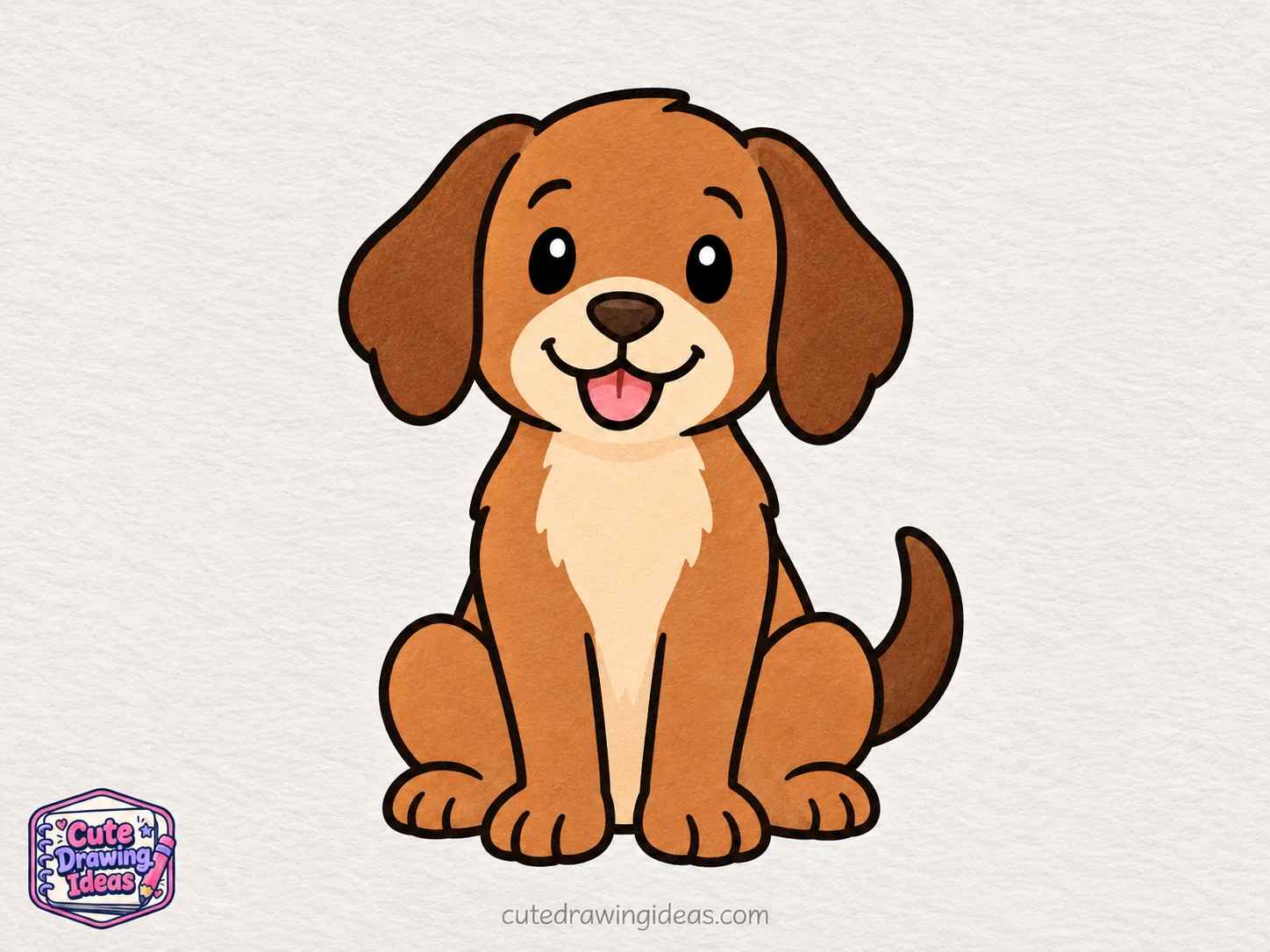
I like using warm brown for the body and a darker brown for the ears.
You can leave the muzzle and chest a lighter cream color to help those parts stand out.
Use black or dark brown for the nose, and gently color around the eyes without covering their white highlights.
If your dog has a tongue, color it pink.
You can also choose gray, golden brown, black, and white, or any colors you like.
Keep the fur patches a different color from the main body so they’re easy to see.
And that’s your finished cute dog!
Your Finished Cute Dog Drawing
Take a look at the dog you’ve drawn. It has a smiling face, two floppy ears, a broad chest, four visible paws, and a tail curving out from behind its body.
I especially like how the sitting position makes the whole dog easy to recognize without adding complicated fur details.
You can leave it as a black-and-white dog sketch or finish it with colored pencils.
Why I Love Drawing Cute Dogs
One of my favorite things about drawing dogs is that each one can have its own expression.
A dog with raised eyebrows can look curious, while a little smile and relaxed ears make it look calm and friendly.
I also enjoy changing the ears and fur markings. Some dogs have long hanging ears, while others have short ears that stand upright.
These details give me plenty of ways to make a new dog drawing without changing the basic sitting pose.
Tips to Make Your Dog Drawing Even Cuter
Give the Face Some Expression
Try adding two small eyebrow curves above the eyes.
You can tilt them slightly upward for a curious expression or make them softer for a relaxed look.
Keep the marks short so they don’t crowd the forehead.
Add a Simple Fur Pattern
A patch around one eye, a lighter chest, or darker ear tips can make your dog more distinctive.
I like using one or two markings rather than covering the body with lots of different patterns.
Give the Ears a Natural Shape
The ears don’t have to be identical.
You can make one ear slightly longer or bend the bottom of one ear inward.
Small differences can help the drawing look more natural.
Use Light Shading for Depth
If you prefer a cute dog pencil sketch, try shading the areas beneath the ears and around the sides of the chest.
Use gentle pencil strokes and make those areas a little darker than the middle of the body.
This gives the drawing some depth while keeping the cartoon style.
Common Mistakes When Drawing a Dog
The Head Looks Too Large for the Body
If the head is much bigger than the body, your drawing may not have the proportions you intended.
Fix: Widen the shoulders and lengthen the body slightly. The chest should be clearly visible below the head.
The Muzzle Is Too Close to the Eyes
When the muzzle sits too high, the face can look crowded.
Fix: Move the muzzle into the lower half of the head and leave some space between its top edge and the eyes.
The Front Legs Look Uneven
One leg may end up longer or wider than the other.
Fix: Lightly mark the ground level before drawing the paws. Use that mark to keep both paws resting at the same height.
The Back Legs Are Difficult to See
Sometimes the back legs blend into the body because their outlines are too close to the front legs.
Fix: Draw the rounded back-leg curves a little farther out from the body. Place the back paws beside the front ones rather than directly underneath them.
Fun Variations to Try
You can make several cute dog drawings by changing a few features of the dog you’ve just drawn.
1. Cute Kawaii Dog Drawing
To create a kawaii-style dog, make the face rounder and use small, evenly spaced facial features.
Add two little blush marks on the cheeks and a tiny curved mouth.
Keep the legs and body recognizable, but simplify the fur details.
This gives your dog a charming cartoon appearance.
2. Cute Fluffy Dog Drawing
Try giving your dog a fluffy coat.
Add little tufts of fur around the cheeks, along the chest, and near the tail.
Use short, uneven curves instead of making the whole outline smooth.
You can also make the ears look fuller by adding a few small fur points near their edges.
3. Cute Dog With Pointed Ears
Draw the same sitting dog, but change its ears.
Instead of making them hang beside the face, draw two upright ears on top of the head.
Use rounded triangles with slightly curved sides.
Add smaller shapes inside the ears to show their inner parts.
This simple change gives your dog a noticeably different appearance.
4. Cute Dog Holding a Heart
For this drawing, add a large heart in front of the dog’s chest.
Position it between the front legs and let it cover part of the lower body.
Draw the front paws resting against the sides of the heart, as though the dog is holding it.
You can write a short message inside the heart or decorate it with a little pattern.
Fun Facts About Dogs
Here are a few interesting facts about dogs that I thought would be nice to share.
- Dogs have a strong sense of smell. They use their noses to explore places, recognize scents, and learn about their surroundings.
- Dogs communicate with their ears. Their ear position can help show whether they’re relaxed, alert, or uncertain.
- Dogs have whiskers. These sensitive hairs help them detect nearby objects and movements.
- Dogs come in many sizes and shapes. Some have long ears, while others have pointed ears, short legs, or curly tails.
- A wagging tail doesn’t always mean happiness. Dogs can wag their tails when they’re excited, nervous, or interested in something.
Frequently Asked Questions
Can Beginners Learn to Draw a Cute Dog?
Yes. You can begin with the head and work downward, adding one body part at a time.
I recommend sketching lightly first so you can change any lines before using a marker.
How Can I Draw a Dog Without Coloring It?
You can leave your drawing as a clean black-and-white outline.
To add a little detail, use a pencil to shade the ears, muzzle, and areas beneath the body.
How Do I Draw Different Dog Ears?
For floppy ears, use long curves that hang beside the head.
For pointed ears, draw two upright, rounded triangles.
You can also try one ear standing up and the other bending downward.
How Can I Make My Dog Drawing Look More Realistic?
Start by keeping the head, chest, and legs in proportion.
Make the muzzle slightly more defined and add a few short fur strokes around the ears or chest.
You don’t need to draw every hair. A few carefully placed details can make the dog look more natural.
What Is the Easiest Way to Draw Dog Paws?
I find it easiest to draw each paw as a small rounded shape at the bottom of the leg.
Then I add two short curves for the toes.
You can skip individual claws if you want a clean cartoon drawing.
Keep Drawing
I hope you enjoyed learning how to draw this cute dog.
Next time, try giving your dog pointed ears or a different facial expression. Use the same nine steps and see how much its appearance changes.

